



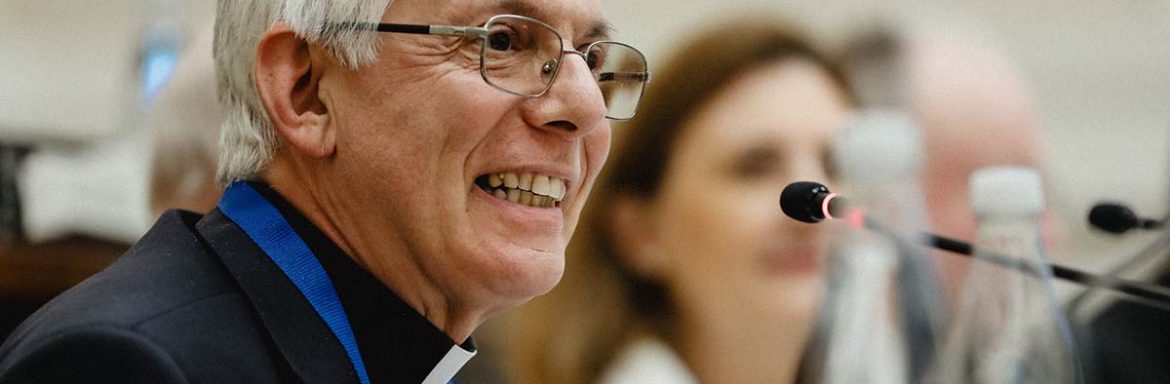
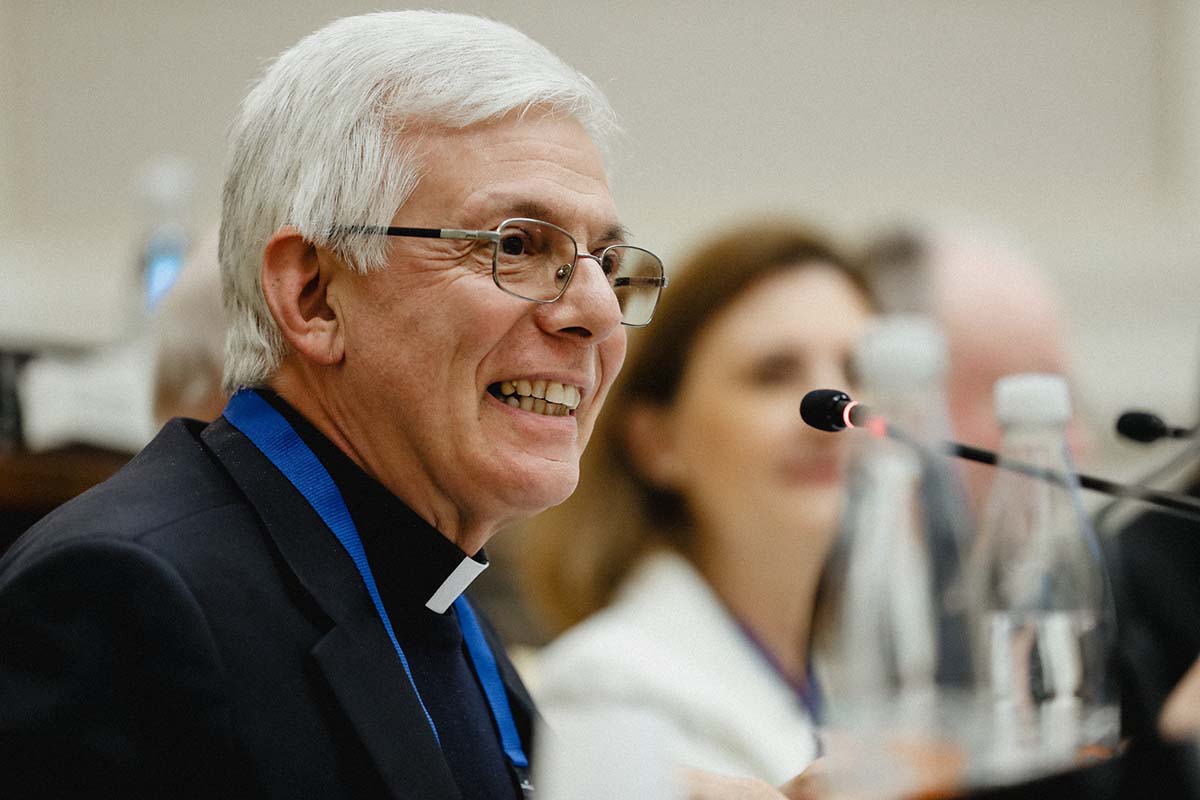
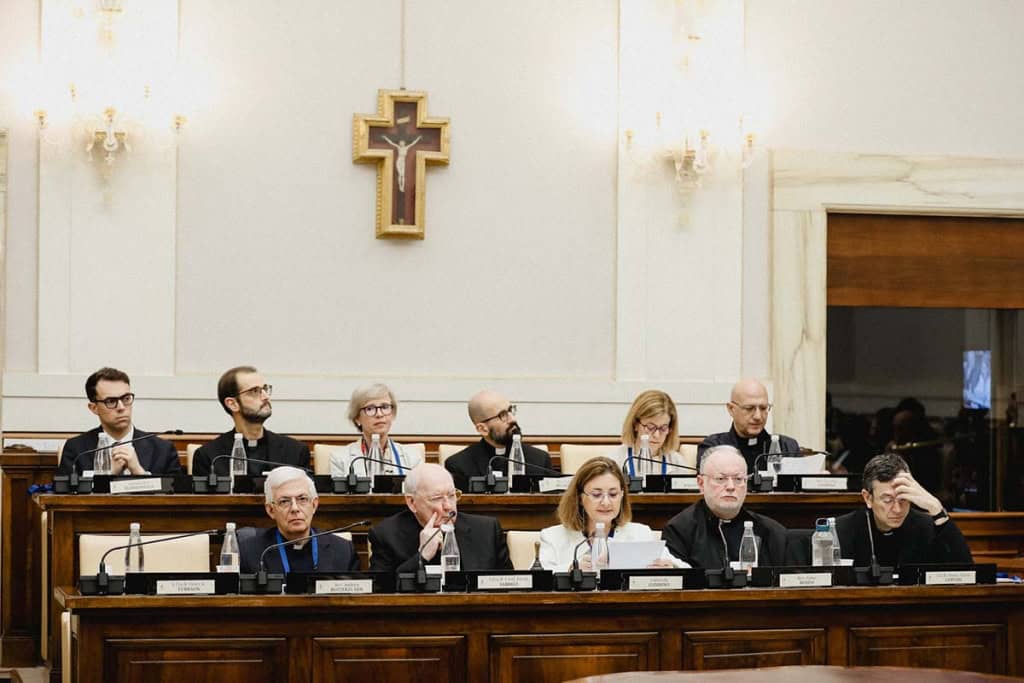
(ANS – Vatican City) – The Dicastery of the Holy See for the Laity, Family and Life organised a study day on “The Sacrament of Marriage, Faith and the munus docendi” on Tuesday 28 April 2026, at the Pius IV Villa in the Vatican . Among the distinguished panel of speakers was the Rector of the Pontifical Salesian University (UPS), Fr Andrea Bozzolo, who gave a presentation entitled: “The Sacrament of Marriage and Faith”.
The initiative, organised as part of the tenth anniversary of Pope Francis’ Apostolic Exhortation Amoris Laetitia, arose from the realisation that the relationship between marriage, faith and the Church’s proclamation is today a pastoral and formative issue of particular importance. In an era marked by profound cultural changes, the day aimed to offer an opportunity for reflection on how to accompany young people, engaged couples and married couples, and, at the same time, on how to form ministers and pastoral workers capable of supporting this journey with greater awareness and competence, offering priests a formation that is less abstract and better able to engage with the concrete lives of families, the questions of young people and the transformations in the culture of affection.
In his opening address, Cardinal Kevin Farrell, LC, Prefect of the Dicastery for Laity, Family and Life, quoted Pope Leo XIV to recall that “in the family, faith is passed on together with life, from generation to generation”. Yet, according to the most recent surveys, “the transmission of the faith in families appears much weaker than in the past”, with a 31% drop between 1991 and 2021 in the number of baptisms administered worldwide to children under the age of 7, and a 48% drop in Catholic marriages.
Faced with the temptation for the clergy to abandon the field, due to the difficulty “for many pastors to effectively engage with the world of young people and families”, the Church has instead decided to respond with a renewed commitment to forming pastors – and the seminar at the Casina Pio IV represented a small but significant initiative in this regard.
In his address, Fr Bozzolo analysed in detail the relationship between Christian marriage and faith in the light of contemporary cultural transformations. In this regard, he observed that even today the desire for a family remains strong, but that the bond between a couple increasingly involves cohabitation as a preliminary test, thus often making marriage a contingent possibility.
Today’s reality has led to distorted interpretations even within the Church, with a tendency to view the validity of marriage in purely legal terms, without giving due consideration to the faith of the spouses – a problem that is then exacerbated in the subsequent stages of pastoral care.
Emphasising that the bond between man and woman contains a quest for meaning that naturally opens the way to faith, Fr Bozzolo remarked, with reference to the Book of Genesis, that the sacrament of marriage does not sanctify a profane reality, but celebrates the recognition of God’s presence already at work in mutual love.
In conclusion, Fr Bozzolo therefore highlighted the need for a new pastoral approach to marriage, one that accompanies engaged couples not through formal formation courses or isolated notions, but within their own emotional journey, and proposed the opportunity for shared formation among laypeople, consecrated persons and ordained ministers, to better understand the family vocation – with a specific focus on the emotional and sexual education of young people, given that Christian teaching on the subject often reaches young men and women today only in partial or distorted forms.
After the coffee break, Father Fabio Rosini, professor at the Pontifical University of Santa Croce andDirector of the Vocations Service of the Diocese of Rome, spoke. In his report “Faith and Generativity in the Perspective of the Munus Docendi and the Sacrament of Matrimony”, he began with the observation that today’s presbyteral formation still has “only the contents of Vatican II and not the style”.
His intervention therefore appealed to develop an education that I do not use “guilt”, and to recover a language that embraces the nomistic, prophetic and wisdom dimensions of the Bible, to become overall a didactic-training language, capable of accompanying today’s men and women on the path of Christian life and life. A process, therefore, which for Fr Rosini also requires “a new pedagogy in seminars and lifelong learning”.
The two reports were followed by a lengthy dialogue in the assembly between all the participants.
A video summary of the event is available on the Dicastery’s Facebook page
Source: ANS – “Agenzia iNfo Salesiana”