



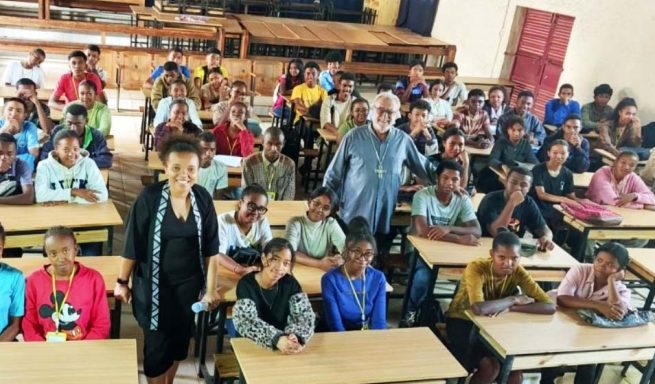
(ANS – Moramanga) – Salesian Bishop Rosario Saro Vella has been at the helm of the Diocese of Moramanga, in eastern Madagascar, since 2019; the area is marked by poverty, a lack of healthcare and non-existent roads. Amidst villages reached by motorbike and cyclone emergencies, the priority is education. His ambitious project is the “Don Bosco University”, supported by the Italian Episcopal Conference (CEI), to offer a future to the poorest young people. 10,000 students attend the Catholic schools in his diocese and over 900 young people receive scholarships and comprehensive support. But amidst corruption and the exploitation of mineral resources, development remains an ongoing challenge.
To reach the most remote villages of his vast diocese, in Moramanga, in eastern Madagascar, the bishop must use a motocross bike: in many areas, there are no roads.
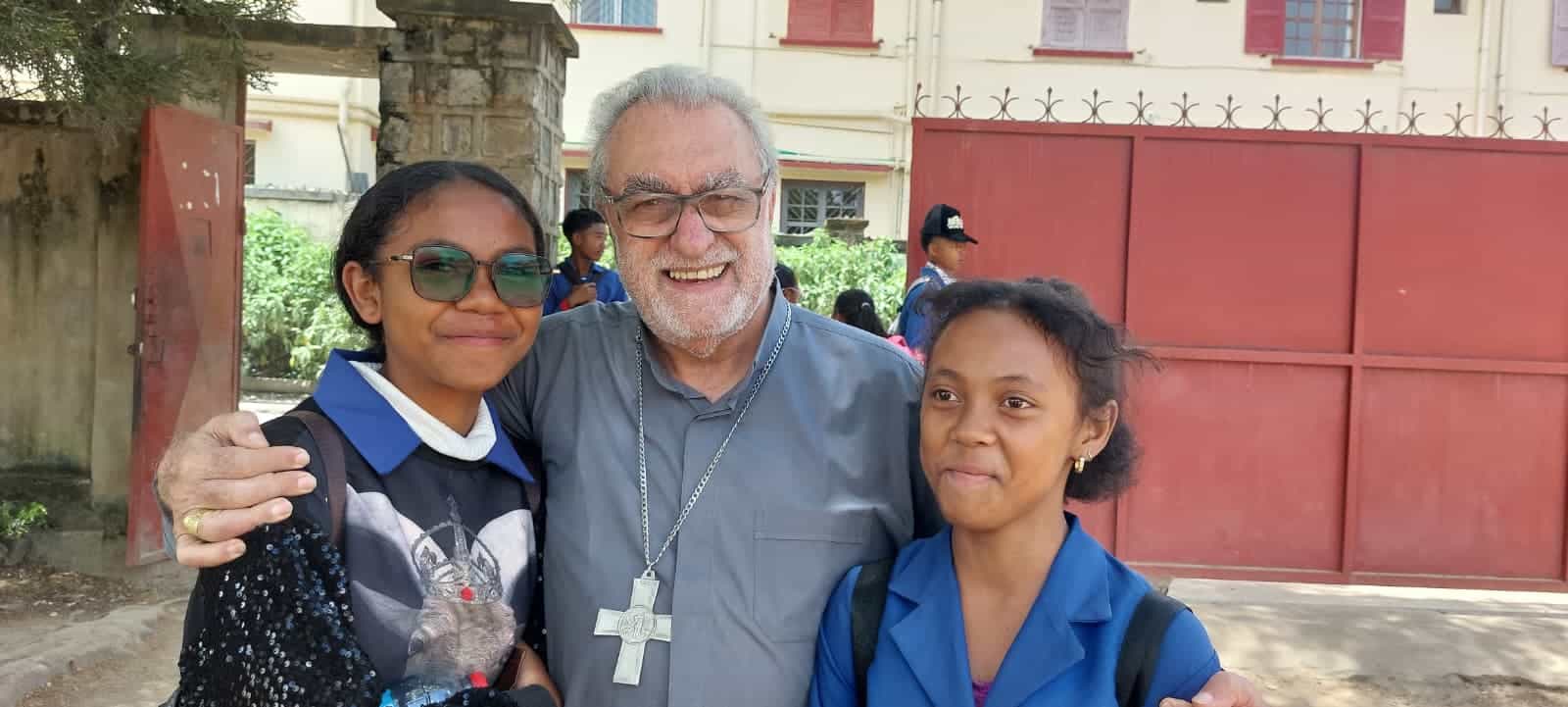
Bishop Rosario Saro Vella, 75, a Salesian originally from Canicattì (Agrigento), has been a missionary on the ‘Red Island’ for 45 years and knows it like the back of his hand. He is the only Italian bishop in the country. He travels by motorbike, true; but also by canoe and off-road vehicle.
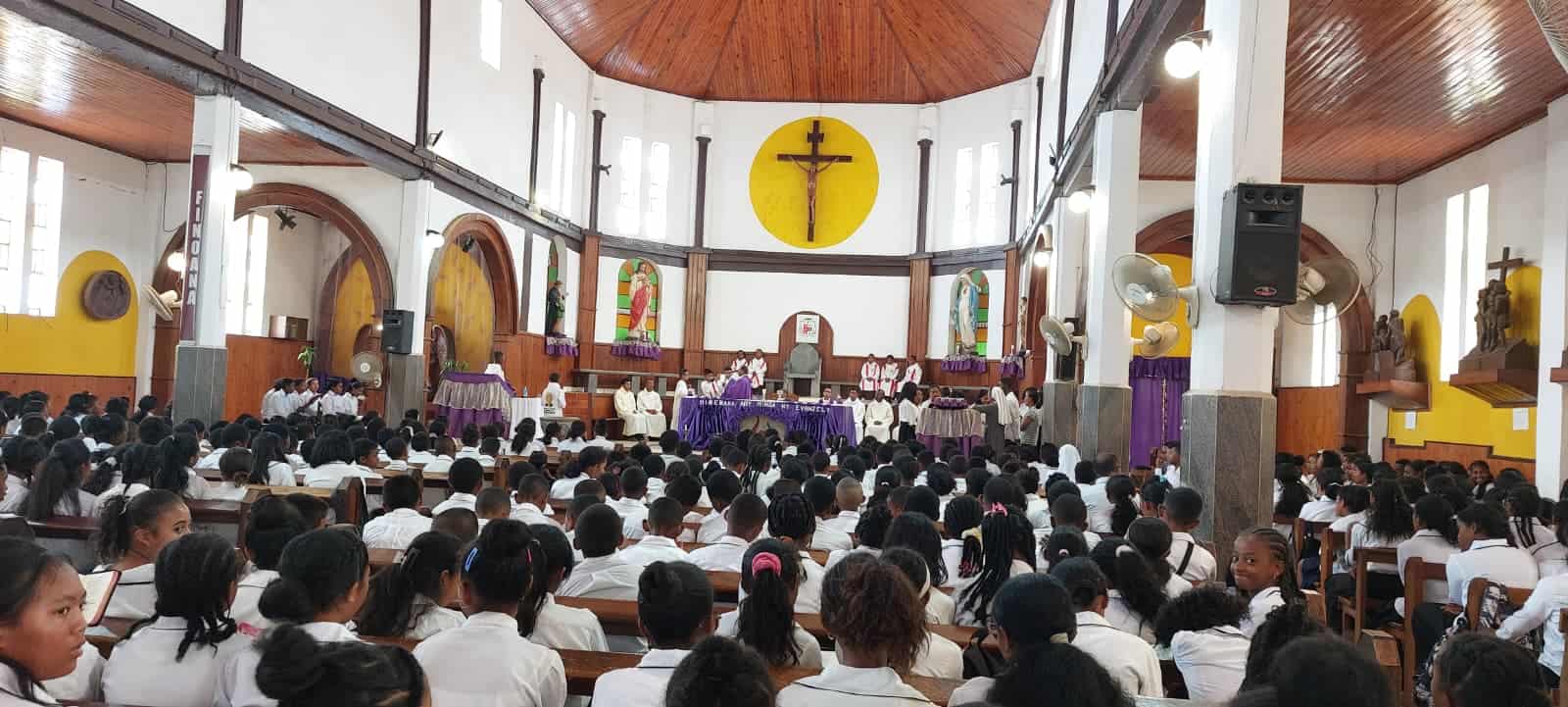
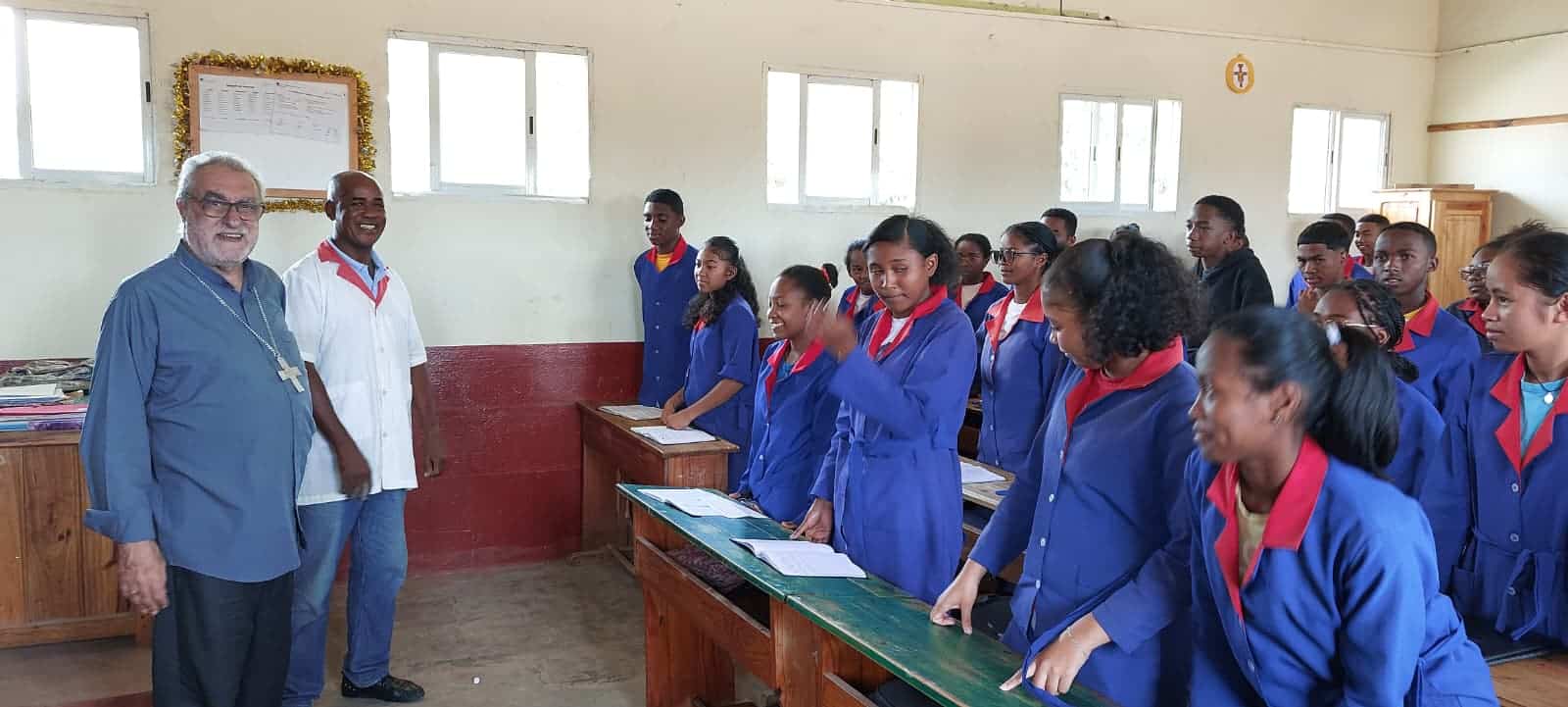
His diocese lies three and a half hours’ drive along potholed and cratered roads from the capital, Antananarivo. The cathedral’s bell tower rises above houses made of straw and mud: few can afford bricks or corrugated iron. Inside, the church is packed with young people preparing for confirmation, a sign of a vibrant Church community looking to the future. “We have 10,000 students in our schools, from nursery to sixth form: an incredible resource,” he says.
Priority: education
This is why the “Don Bosco University” is about to be established. As a true Salesian, Bishop Vella is fully committed to education. The most ambitious project is the creation of a large university capable of accommodating at least a thousand students. The university site is five kilometres from the curia: lecture halls, a library, dormitories and staff accommodation are currently under construction. CEI, through the “Service for Charitable Interventions for the Development of Peoples”, will fund the project with one and a half million euros. The Salesians of Don Bosco themselves, private donors and associations will also contribute, and a shelter for single mothers and vulnerable women, run by Sisters, will also be established in the same area.
The main building, currently under construction, will be inaugurated in May. Since last year, courses in Economics and Law have been running, with 300 students enrolled. Subsequently, courses in Education, Tourism and Communication will also begin. The diocese supports over 900 university students with scholarships, at a cost of nearly €100,000 a year. “We try to help all those who deserve it,” she explains.
At the helm of the academic project is Prisca Marav, one of Madagascar’s youngest Rectors, aged under 35. Having graduated in Political Science in her home country, she specialised in international law in Loppiano, Italy, thanks to the support of the bishop who believed in her. The difficulties are mainly financial: “Here, the priority is to eat every day. Going to university is a huge challenge. Many students have to work to help their families, even though fees are very low—less than 50 euro a year—and we offer scholarships.
“Some arrive without having eaten,” explains the Rector. Persuading the most promising young people to continue their studies often means taking workers away from the fields.
Holistic formation. Many students come from villages in the savannah, where people live off rice paddies and zebu herding. Few want to study agriculture or tourism, sectors that are strategic for development: “Everyone dreams of an office job. We need to raise awareness to help people understand the country’s real needs,” observes Marav. The diocese also supports the young people on a personal level: it houses them in religious communities and contributes to food, rent and medical expenses. “We don’t just focus on their studies, but on the whole person, on holistic formation.” Meanwhile, local Caritas organisations build brick houses for homeless families, help with the purchase of medicines and cover urgent expenses.
The diocese’s challenges
In Moramanga, there are around 600,000 Catholics, served by 35 priests – religious and diocesan – and 22 congregations. The focus is primarily on education, charity, social work and healthcare, in a country where 75% of the population lives below the poverty line and public healthcare is virtually non-existent.
“We rode motorbikes to a gold-mining area and met some young people carrying a girl on a makeshift stretcher made of bamboo poles and blankets. They had walked for 18 hours and still had another ten or so to go to reach a clinic. These are extremely serious and absurd injustices,” says “Father Saro”, as his friends call him. “We are thinking of trying to build a new clinic in those areas.”
Then there are the emergencies, which are never in short supply. In recent weeks, Cyclone “Gezani” destroyed houses, ripped off roofs, and even knocked over sturdy shipping containers. The bishop went to offer encouragement and bring aid. Fortunately, there were no casualties in the diocese.
On the political front, despite last October’s protests and new faces in power, the underlying situation has not changed. And then there is the notorious issue of mineral resources, which could be a blessing but instead becomes a curse. Madagascar is rich in gold, coltan and cobalt. “Unfortunately, the benefits do not go to the people but to a few rulers and foreign multinationals,” explains the bishop. “There are middlemen, often political emissaries, who take the resources and then resell them abroad for ten times the price. Japan, China, Russia, France and the United States are all present here. Anyone who can comes to take their share.”
If the roads were good, it would already be a huge step towards development, especially through tourism, in a country of stunning landscapes and unique flora and fauna, such as the 119 species of lemurs that exist only here. “But where the mines are, they don’t want roads,” concludes the bishop, “because that way they can continue to pursue their own interests without others coming in.”
Patrizia Caiffa
Source: SIR