



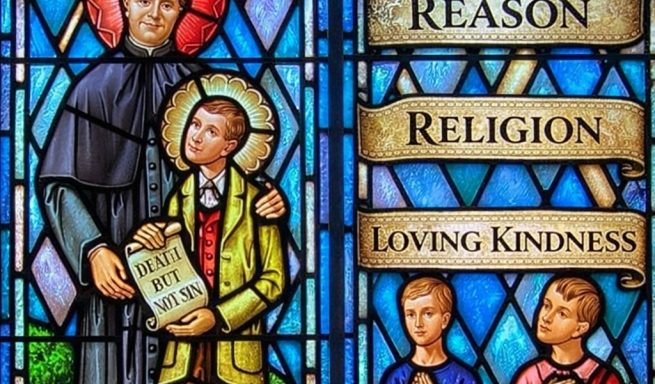
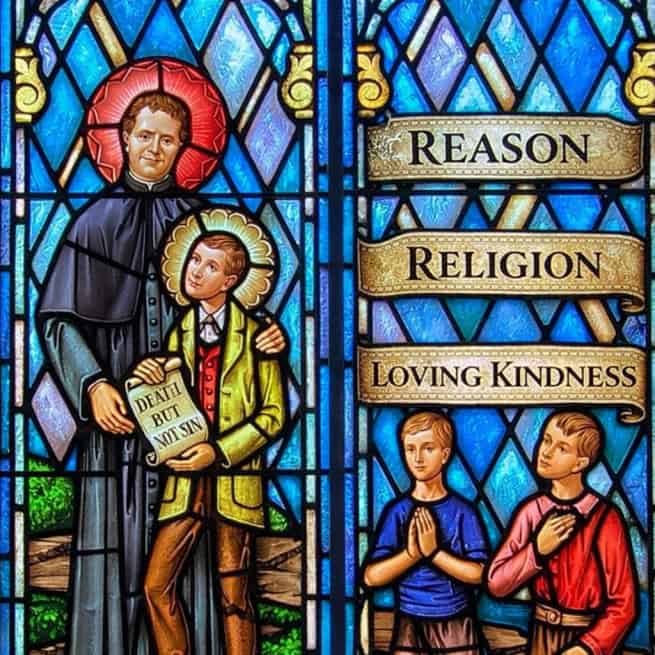
(ANS – Rome) – When Don Bosco presented his Preventive System, he summarised it in three simple yet powerful words: reason, religion and loving-kindness. On these three pillars, he educated thousands of young people in Valdocco and in many other houses, and on these same foundations, the Salesian world continues to build schools, oratories and social works all over the world. This is not an educational slogan, but a real ‘grammar of education’, capable of holding together the minds, hearts and souls of young people.
For Don Bosco, reason means first and foremost helping young people to understand the why behind rules and educational proposals. He does not limit himself to commanding or prohibiting: he explains, dialogues, argues, and tries to convince with human and spiritual motivations. Salesian texts emphasise that ‘reason’ implies rationality, clarity, and respect for the intelligence of the young person, accompanying their growth not with emotional pressure but with the light of truth. Educating with reason means having confidence in the young person’s ability to understand what is good and to freely choose it; for this reason, the Salesian environment values dialogue, good explanations and the search for the deep motivations behind choices.
Religion is at the heart of the Preventive System. Don Bosco is convinced that without reference to God, education remains incomplete. For this reason, he proposed a simple and accessible path of faith: age-appropriate catechism, participation in Mass, frequent reception of the sacraments encouraged but never imposed, devotion to Mary Help of Christians. It is a popular, concrete and joyful religiosity that accompanies daily life. One text recalls his conviction that ‘frequent confession and communion and daily Mass are the pillars that must support the educational edifice’. However, Don Bosco insists that nothing should be forced: faith must be proposed in a way that makes it attractive, serene and liberating, so that it becomes a source of peace, meaning and hope on the path of growth.
Loving-kindness is perhaps the most characteristic word and, at the same time, the most difficult to translate. It does not refer to simple sentimental affection, but to an educational style made up of presence, trust, respect and personal relationship. Don Bosco wants young people ‘not only to be loved, but to know that they are loved’. The most recent studies emphasise that loving kindness also includes attention to emotional maturation, the building of healthy relationships and the educator’s ability to make themselves loved with authenticity. In this climate, correction does not humiliate but helps growth; discipline is not imposition but help, because it arises within a relationship in which the young person knows they can trust.
Together, these three words explain why the Preventive System rejects violent punishment and tends to minimise even the harshest sanctions, focusing instead on inner responsibility. A young person placed in an environment where the rules are reasonable and explained (reason), where the presence of God is felt (religion) and where one feels sincerely loved (loving kindness) is less likely to fall into serious error and, if he does fall, is more willing to get back up.
For this reason, even today, those who educate in the Salesian style can start from these three words: few, simple, but capable of educating generations, because they speak to the minds, hearts and souls of young people.
Source: ANS – “Agenzia iNfo Salesiana”